
The Major Scale - Tremolo Lesson 7
Music notes are like stairs. Instead of moving feet between steps, we climb by moving our mouth while breathing in and out. The harmonica has some tricky steps, one is covered in this lesson.
First, review the 6 note exercise from the previous lesson, that is, 1 2 3 4 5 6. It sounds like this.
Play this exercise slowly a few times. Notice that the 6 notes are 3 pairs of blow draw notes
Now we add two notes. Play the exercise, then, after the last note, move your mouth slightly to the right, breathe in, then breathe out to finish. The two new notes are B and C. The entire exercise sounds like this.
This set of notes of notes should sound familiar. It is called a Major Scale, and is the foundation for most music in Asia and the West. Play the scale a few times, slowly. Note how the breathing reverses between notes 6 and 7, breaking the blow draw pattern. The breathing for the 8 scale notes is
Blow Draw Blow Draw Blow Draw Draw Blow
Beginning (and experienced) harmonica players must know where the breath sequence changes, to be ready for the adjacent draw notes . This requires practice.
The major scale notes are C D E F G A B C. Notice how the C repeats at the end. This ending C note is a higher version of the starting note. Or, in music terms, the final C is one "octave" higher than the starting C.
The Asian notation for the first seven scale notes is simple: 1 2 3 4 5 6 7. The final note is represented by a 1, however this time a dot is included above the number, to show that the note is an octave higher. So, the Asian notation for the Major scale is
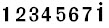 Play the major scale up and down, slowly, like this
Now play the scale up and down, twice, with this backing.
Finally, play the scale twice with the accompaniment only.
The major scale, or parts of it appear in most music. As the lessons progress you will become fluent with this scale, and the music it opens for you.
Click here for the next lesson.